Here are some of my computer science heroes...
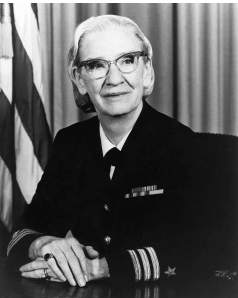
Grace Hopper (December 9th, 1906 – January 1st, 1992) was a pioneering computer scientist who made significant contributions to the field of computer programming. She helped develop the first computer programming software and invented the concept of using words in programming instead of symbols, making computing more accessible.
Major Academic Achievements: Grace Hopper graduated from Vassar College in 1928 and earned her Ph.D. in mathematics from Yale University in 1934. She then taught mathematics at Vassar before joining the Naval Reserve in 1943.
Contributions: Grace Hopper was assigned to work on the Mark I, the first large-scale calculator, at Harvard University. In 1946, she authored the first computer manual. In 1953, she envisioned writing programs in English words instead of symbols, an idea initially denied. However, by 1956, her team successfully created FLOW-MATIC, the first programming language to use word commands.
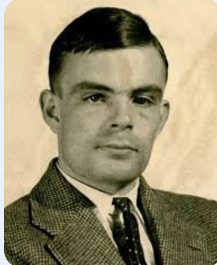
Alan Turing (June 23, 1912 — June 7, 1954) was a British mathematician, logician, and cryptanalyst who made significant contributions to the development of theoretical computer science and artificial intelligence.
Major Academic Achievements: Turing graduated from King’s College, Cambridge, with a first-class honors degree in mathematics in 1934. He completed his Ph.D. at Princeton University in 1938, where he developed concepts that became essential to computer science.
Contributions to Computer Science: Alan Turing's most notable contribution was his concept of the Turing machine, a mathematical model that defined the limits of what can be computed. This work became the theoretical basis for modern computers. He also played a pivotal role in breaking the Enigma code during World War II, significantly aiding the Allied forces.

Margaret Hamilton (August 17, 1936 – present) is an American computer scientist, systems engineer, and businesswoman known for her groundbreaking work in the field of software engineering.
Major Academic Achievements: Hamilton graduated from the University of Michigan with a bachelor's degree in mathematics in 1958. She began her career as a mathematician and quickly moved into computer programming, working on various projects that would solidify her reputation as a pioneer in her field.
Contributions to Computer Science: Margaret Hamilton is most famous for leading the team that developed the onboard flight software for NASA’s Apollo space missions, including the Apollo 11 mission that successfully landed the first humans on the Moon. Her work on error detection and recovery was critical in ensuring the spacecraft's safety and mission success. Hamilton is credited with coining the term "software engineering," highlighting the importance of rigorous methodologies in software development and bringing attention to the field's significance as a discipline.